
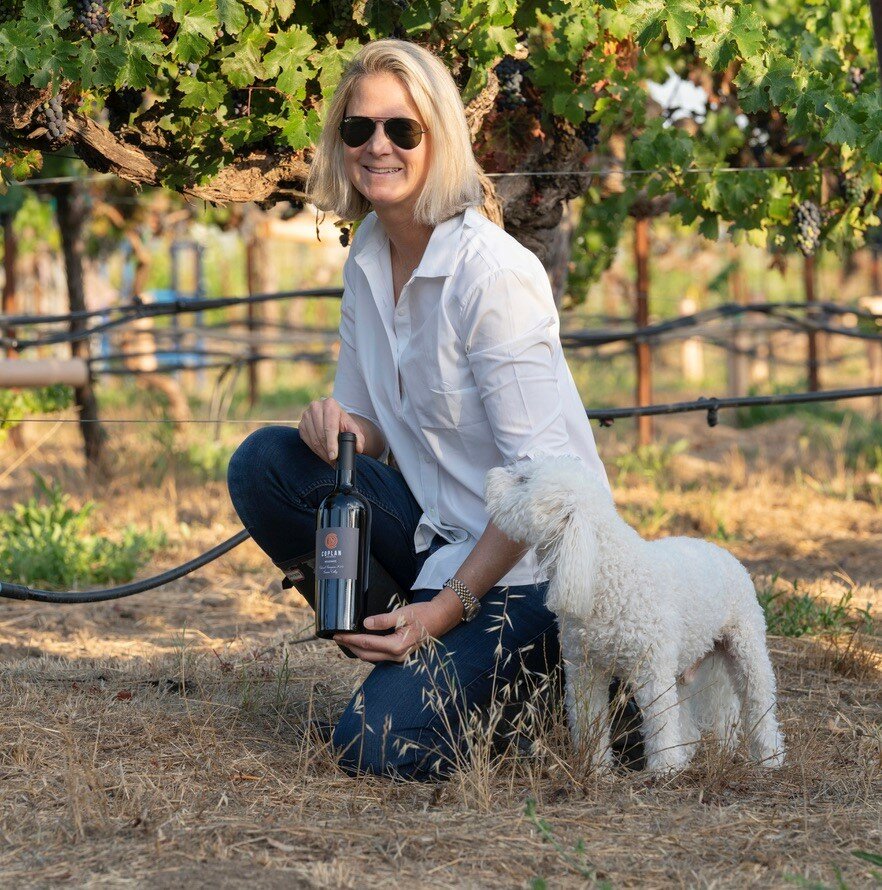

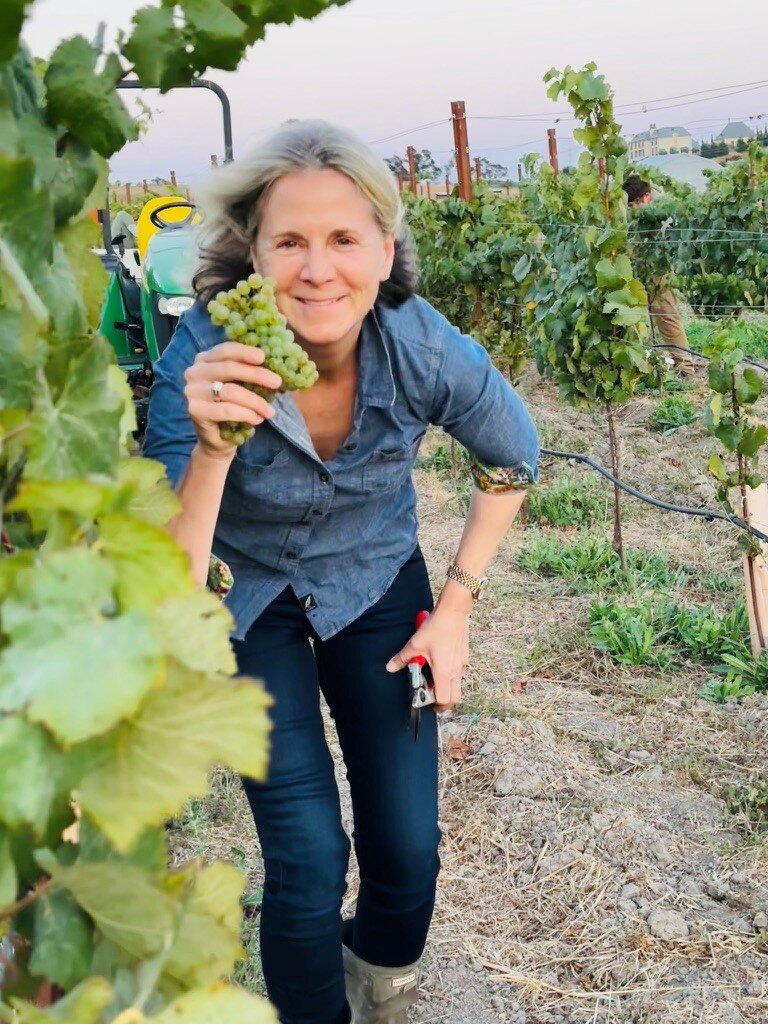


Jacksonville native Carole Coplan is the founder and proprietor of a vineyard in California’s Wine Country, an attorney and now the author of a children’s book.
Tell me about Coplan Vineyards.
I’m a third-generation Jacksonville native and a first-generation winegrower, which still makes me smile when I say this. Coplan Vineyards is my bridge between the First Coast and Sonoma’s Carneros AVA — a place where a lifelong love of food, wine and gathering with family and friends became my dream project of farming wine grapes and olives, making exquisite wines and olive oil, and providing luxurious experiences for our Villa vacation guests.
I grew up in my Jacksonville family, where meals were an event and wine was part of the story. After the University of Florida, I attended law school in California and built a career as an attorney in the San Francisco Bay area's high-tech sector. But on weekends, I found myself drawn north to Sonoma, searching for a vineyard retreat. When I discovered the property that is now Coplan Vineyards, it felt like a dream come true. I took a leap and became a steward of a historic Cabernet Sauvignon vineyard, with vines dating back decades and recognized on the historic registry.
Carneros is best known for its Chardonnay, and after more than seven years of regenerating and restoring the soils, I planted Chardonnay in 2019. I also planted an olive orchard of 100 olive trees — Tuscan varietals to make amazing olive oil. My commitment to regenerative farming shapes everything we do. We began making our own wines in 2015 after realizing that the fruit we were growing was producing extraordinary wines for others. We began bottling exquisite olive oil from the estate orchard in 2022 once the olive orchard matured. It was time to tell our own story, and today that story is beautifully expressed in every bottle.
Today, Coplan Vineyards produces artisan wines — award-winning Chardonnay, Pinot Noir, Cabernet Sauvignon, and a thoughtfully crafted red blend. Production is intentionally limited to allow us to focus on quality and character. Each wine reflects the cool-climate elegance of Carneros and the care we put into the vineyard.
The property has grown into more than a vineyard. I planted a small olive orchard beginning in 2013 and now produce limited quantities of estate olive oil. The Villa at Coplan Vineyards offers a modern, luxurious retreat overlooking the vines and gardens — an immersive experience in wine country living. We’ve even been fortunate to receive attention from outlets like Netflix’s “Chef’s Table” and international travel programs.
At its heart, Coplan Vineyards honors heritage — both my Jacksonville roots and the historic roots of my vineyard — through the crafting of exquisite, small-batch boutique wines and olive oil that express the elegance, depth and distinct character of Carneros. You can learn more about us at Coplanvineyards.com
How would you describe your wines?
We produce estate wines from our Carneros vineyard, along with a limited single-vineyard Pinot Noir from a select site. Our production is intentionally small — typically just 100 to 150 cases — allowing for a true vineyard-to-bottle approach. Every decision is hands-on, from farming through fermentation.
We focus on terroir, allowing the vineyard and each vintage to express itself naturally. The grapes are grown and harvested by us when flavor and chemistry are in balance. Fermentation relies on native yeast from the fruit, and we age the wines in carefully selected French barrels, favoring a more neutral oak profile so the vineyard character remains front and center.
The wines are balanced and expressive, with vibrant acidity and a long, elegant finish. Our Chardonnay shows bright citrus and orchard fruit with subtle minerality; the Pinot Noir offers layered red berry notes and earthy nuance; and our Cabernet Sauvignon and red blend bring depth, structure and refined tannins. Each vintage reflects the rhythms of the season — authentic, site-driven wines crafted on a boutique scale.
Are they available here on the First Coast?
We recently introduced Coplan Vineyards to the First Coast with a tasting at Coastal Wine & Tapas in Ponte Vedra, which was a wonderful reception back home. Because we are a micro-producer of ultra-premium wines, distribution is intentionally limited. Outside of select placements like Coastal, our wines are primarily available directly through our website and at the winery in Sonoma.
We choose partners carefully, focusing on upscale wine shops and restaurants where there’s meaningful interaction between the venue and the guest. Our wines are handcrafted and produced in very small quantities, so we want them poured in settings where the story behind the bottle can truly be shared.
Do you have some business partners I should mention?
I founded Coplan Vineyards and remain the sole proprietor, but exceptional wine is a team effort. I’m fortunate to work with an outstanding group of professionals who share a commitment to old world farming and producing exquisite wines.
Our winemaker, Jacqueline Yoakum, holds a master’s degree from UC Davis and brings extensive experience from several notable wineries before joining Coplan Vineyards. Her technical precision and intuitive understanding of Carneros vineyards is invaluable to our style.
Though you’ll sometimes see me on a tractor, I work with a small, nimble vineyard management team that is deeply committed to organic principles and regenerative practices. We produce our wines at a Sonoma wine-making facility alongside other philosophically aligned boutique producers, creating an environment that values collaboration, integrity and excellence.
Do you continue to practice law?
I’ve served as general counsel for high-tech and health care companies, and I previously led a large consulting practice at a major law firm. The practice of law has been a meaningful and intellectually rigorous part of my career.
Farming and winemaking are a terrific counterbalance, as they require patience, discipline and long-term thinking — qualities that translate well from the boardroom to the vineyard. Both demand strategic judgment, risk assessment and respect for timing.
I’m currently on sabbatical from active legal practice, with plans to re-engage with a technology company in a remote capacity. For me, the two worlds are complementary: one sharpens the mind; the other feeds the soul.
How did you make the transition to winemaking?
The transition felt surprisingly natural. I had long loved wine country and wanted something that would complement my legal career with a more hands-on, land-based pursuit. Farming and winemaking offered that balance.
That said, I didn’t grow up in agriculture — I’m a first-generation farmer — so I approached it with both curiosity and respect. I immersed myself in vineyard and farming courses, studied the science behind soil health and viticulture, and most importantly, surrounded myself with experienced growers and winemakers. Sonoma has an extraordinary community of boutique farmers who are generous with their knowledge.
I’m part of a new-wave return to old-world techniques — farming organically, avoiding herbicides and doing much of the work by hand, from pruning to canopy management. It’s labor-intensive, but it fosters a deeper connection to the land and ultimately yields more expressive fruit. The learning never stops, and that’s part of what makes it so rewarding.
You fly back and forth between California’s Wine Country and Duval County. What continues to draw you back to the First Coast?
My roots run deep in both places — the vineyard in Carneros and the First Coast. I divide my time between Sonoma and Atlantic Beach, and Jacksonville will always be home. My sisters live in Ponte Vedra and Jacksonville, and although my parents are no longer with us, I continue to manage family property here, which keeps me closely connected.
I grew up surfing these beaches, and there’s something about the rhythm of the ocean that still grounds me. The pace on the First Coast is restorative — it’s where I go to think clearly, recharge and reconnect. Sonoma feeds my creative and agricultural side; Jacksonville feeds my sense of history and belonging.
Both landscapes shape me in different ways, and I’m grateful to call them home.
I’m also very interested in your book, “Orangey and Ricky: Country Cat, City Cat.” Where did you get the idea for it?
Writing “Orangey and Ricky: Country Cat, City Cat” was truly a passion project. It tells the real-life story of Orangey, a barn cat who adopted Coplan Vineyards, and Ricky, my “big city” cat who traveled back and forth with me between Sausalito, when I had a house there, and Sonoma. It’s a bit of a “tail of two kitties” — an unlikely friendship between animals from very different worlds.
The story grew organically from life at the vineyard. Orangey became part of the fabric of the property, greeting guests and keeping watch over the vines, while Ricky brought a touch of city polish to wine country. Their bond mirrored my own journey between two places and two worlds.
Coplan Vineyards has always been a collection of dream projects — restoring the land, crafting small-lot wines, creating a gathering place at the Villa — and this book is another expression of that spirit. It captures the warmth, charm and sense of belonging that make the vineyard so special.
It was interesting to see that Orangey has a clipped ear. Can you tell me about that and why it is important to your story or theme?
A clipped ear is actually an important sign in the animal welfare world. It indicates that a feral cat has been spayed or neutered through a trap-neuter-return program. Like many barn cats in wine country, Orangey had a clipped right ear, showing he had gone through our local rescue’s catch-and-release effort.
I volunteer with that program and have personally brought in Orangey and roughly 25 other feral cats for care. These programs are essential for managing feral populations humanely while allowing the cats to continue living safely in their outdoor environments.
In the book, Orangey’s clipped ear becomes a subtle symbol. I like to think of it as his “fashion statement” — a badge of resilience and community care. Without giving too much away, Ricky eventually ends up with a nearly matching jagged ear of his own after a brave moment protecting his friend. In that way, their ears reflect one of the story’s themes: friendship, loyalty and the marks life leaves on us when we show up for one another.
Where can people get a copy of your book?
Buy local. You can ask for a copy at your local independent bookstore, including BookMark in Neptune Beach. It’s also available at Amazon, Barnes & Noble and directly from IngramSpark, where I published the book.


